
Design Spotlight: Maker Exchange
2024 AIA Tennessee Conference Host Venue
Interview with the Design Team at MHM

Today, we are excited to spotlight the host venue for the 2024 AIA Tennessee Conference in Knoxville, Tennessee. This recently renovated space sits between the Marriott Hotel and The TENNESSEAN Hotel to create a new entry for both hotels and provide event spaces enhanced by carefully curated local art. The Maker Exchange demonstrates rich details and craftmanship, from its interior lighting to its custom signage. We hope our guests for this conference will be able to experience this authentic and unique sense of Knoxville in this creative and vibrant space.
Would you explain the significance of this location and how it connects the two hotels to the city?
The described location serves as a crucial nexus point within Knoxville, linking various key landmarks and districts to each other and to the broader city. Here’s a breakdown of its significance and connectivity:

Intersection for Knoxville: As an intersection, this location serves as a central point within Knoxville, facilitating movement and connectivity between different parts of the city. It acts as a hub for both locals and visitors, offering access to various amenities, attractions, and neighborhoods.
Connection to the University: Being situated between the university and downtown, the location serves as a bridge between the academic and commercial sectors of the city. This connectivity is vital for students, faculty, and visitors commuting between the university campus and downtown areas for work, leisure, and other activities.
Proximity to Historic Neighborhood: The proximity to a historic neighborhood adds cultural significance to the location. It provides visitors with a glimpse into Knoxville’s rich history and heritage, offering opportunities for exploration and appreciation of the city’s past.
Link to World’s Fair Park: The connection to World’s Fair Park enhances the location’s appeal as a recreational and cultural destination. Visitors can easily access the park for leisure activities, events, and gatherings, further enriching their experience in Knoxville.
Activation of Multi-Story Building: Activating the multi-story building at this location adds vibrancy and dynamism to the area. It creates opportunities for commercial and social activities, such as retail, dining, entertainment, and community events, contributing to the vitality of the surrounding neighborhood.
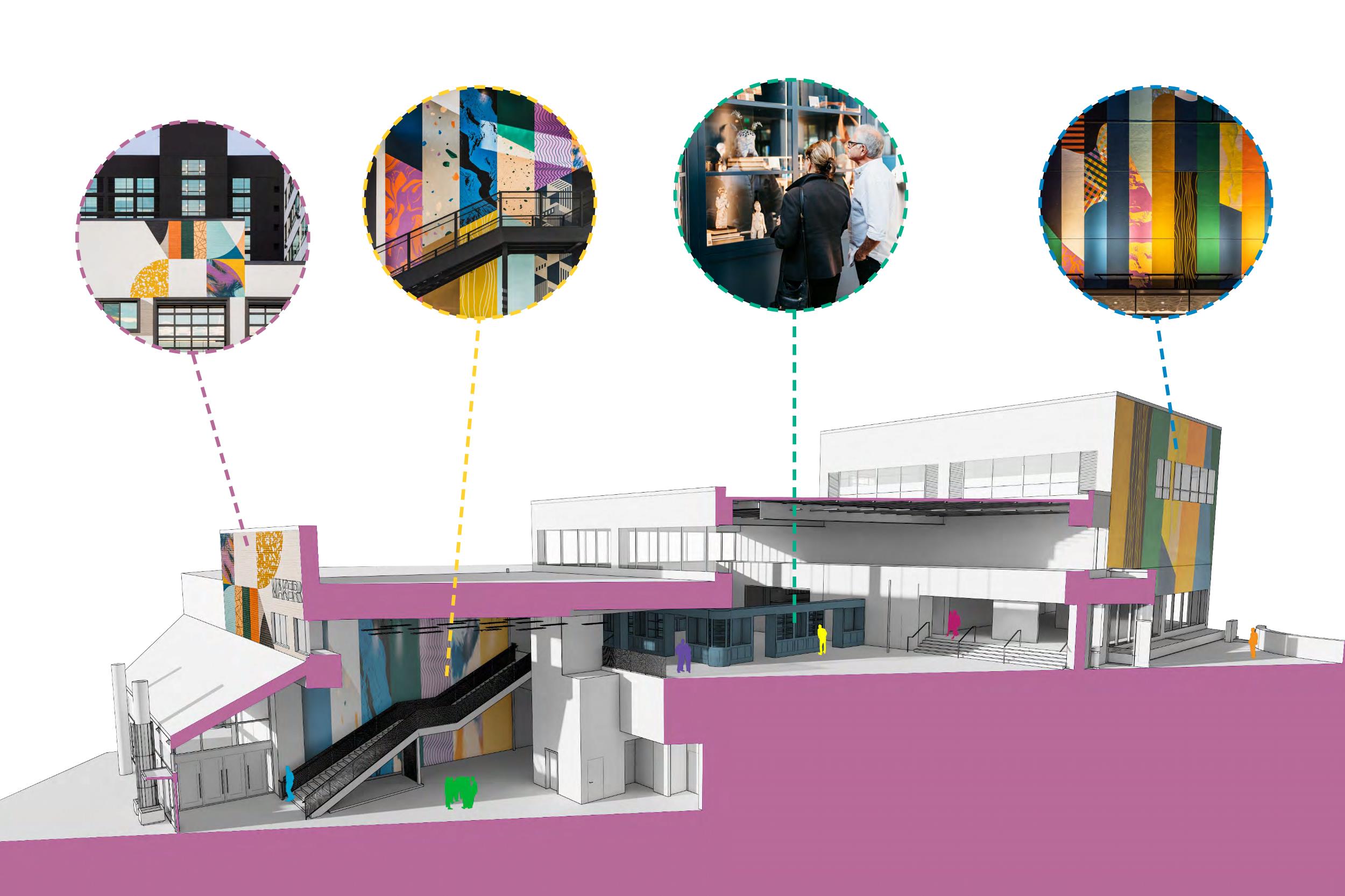
Connection to Convention Center and Sunsphere: The proximity to the convention center and iconic Sunsphere enhances the location’s significance as a tourist destination. Visitors can seamlessly transition between the hotels, convention center, and Sunsphere, facilitating attendance at events, conferences, and exhibitions while also experiencing Knoxville’s distinctive landmarks.
Overall, the strategic positioning of this location fosters connectivity, accessibility, and engagement, making it a pivotal node in Knoxville’s urban landscape.


How early did the artists’ collaboration start in the process? How much did the art inspire the architecture/interiors?
The collaboration between the design team and artists began early in the process, starting from the Schematic Design phase. Below is a breakdown of the collaboration timeline and the impact of art on architecture and interiors:
Inception during Schematic Design: The concept of the Maker Exchange, which involved integrating art and creative elements into the building, was part of the initial Schematic Design phase.
Continuous Collaboration: The involvement of a branding consultant, Robin Easter, alongside the design team throughout the entire process led to a sustained multi-disciple creative collaboration.
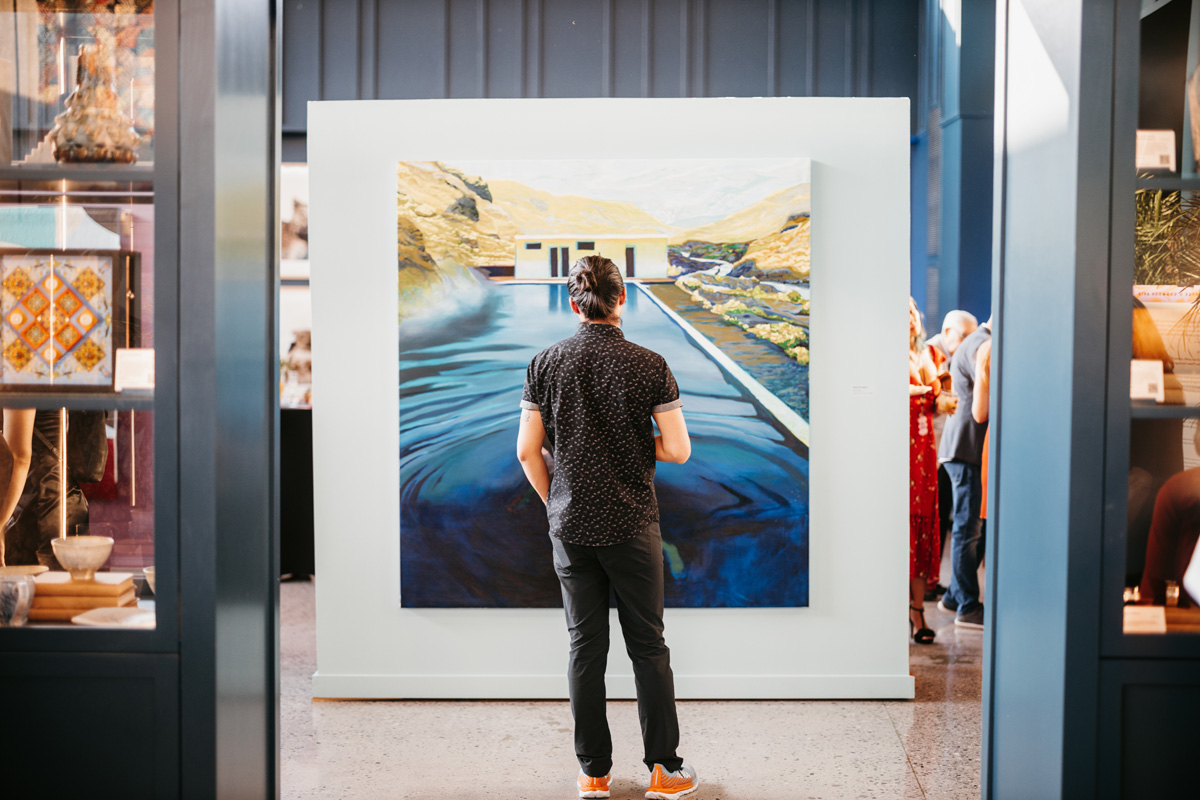
Maker Exchange: Artists and makers were intended to be the focal highlight and lead to the naming of the space. Knoxville is called the Maker City for a reason. The level of integrated art and craftsmanship wasn’t merely an add-on but a fundamental aspect of the building’s identity and design philosophy.
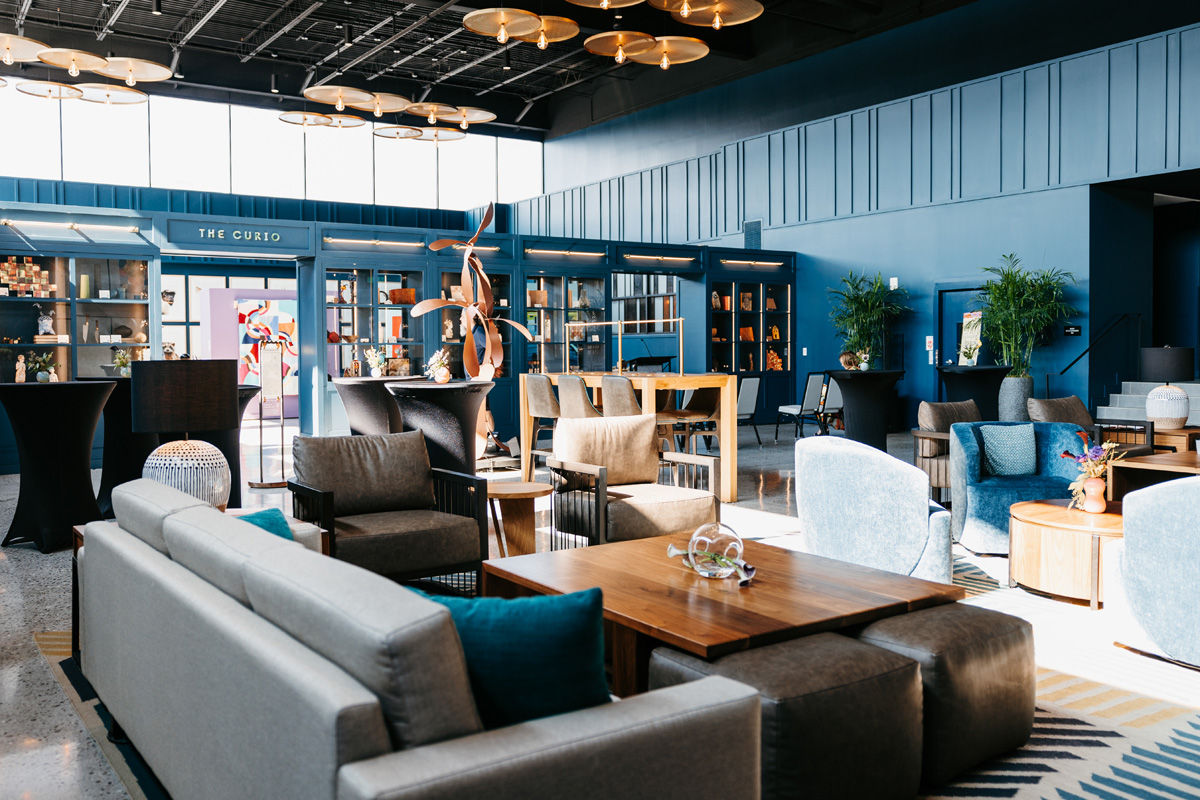
Creation of Focal Features: Artists and makers played a significant role in creating focal features for all spaces within the building.
The art didn’t just inspire the architecture and interiors but actively shaped them, serving as focal points that define the character and atmosphere of each area.
How has the space been used beyond what you expected?
The space has exceeded expectations in several ways beyond what was initially anticipated:
Elevated Use for the Building and World’s Fair Park: The space has not only served its intended purpose within the building but has also contributed to the revitalization of the surrounding area, particularly the World’s Fair Park event lawn. Its utilization has extended beyond the confines of the building, impacting the broader community, and enhancing the appeal of the park as a venue for events and gatherings.
Emergence of Murals: The presence of murals in the area has transformed it into a vibrant public art gallery, enhancing the aesthetic appeal and cultural significance of the surroundings. This unexpected development has turned the area into a destination for art enthusiasts and tourists, further enriching the cultural fabric of the neighborhood.
Host to AIA State Conference: The selection of the Maker Exchange as the host venue for the AIA state conference highlights its newfound prominence and suitability for hosting significant events. This recognition underscores the successful renovation and transformation of the space, positioning it as a hub for professional gatherings and conferences that may not have been anticipated initially.
The space’s multifaceted impact, from contributing to community revitalization to becoming a focal point for art and cultural events, demonstrates its remarkable versatility and significance beyond its original purpose.
Its adaptability and appeal have exceeded expectations, making it a valuable asset not only for the building but also for the broader cityscape and community.

Are there any key concepts and ideas you would like to elaborate on that speak to the conference theme of Grounding?
The conference theme of “Grounding” can be elaborated upon through the following key concepts and ideas related to the Maker Exchange:
Local Collaboration with Makers, Designers, and Artists: The Maker Exchange embodies the concept of grounding by fostering collaboration with local makers, designers, and artists. By engaging with creatives rooted in the community, the space not only supports local talent but also creates a sense of connection and rootedness to the place. This emphasis on local collaboration highlights the importance of grounding architectural and design projects within the context of their surrounding community.
Breathing New Life into a Space: The transformation of the Maker Exchange represents a process of revitalization and renewal, breathing new life into a previously underutilized or neglected space. This concept of grounding involves revitalizing existing structures and spaces, thereby anchoring them within the fabric of the community and infusing them with renewed purpose and vitality.
Sneak Peek of the Local Creative Scene: Visitors to Knoxville can experience a sneak peek of the city’s vibrant creative scene through the Maker Exchange. By showcasing the work of local makers, designers, and artists, the space offers visitors a glimpse into the cultural identity and creative energy of Knoxville. This concept of grounding involves immersing visitors in the local culture and identity, providing them with an authentic and meaningful experience rooted in the place they are visiting.
The Maker Exchange exemplifies the theme of “Grounding” through its emphasis on local collaboration, revitalization of space, and celebration of the local creative scene. It serves as a testament to the power of architecture and design to ground communities, foster connections, and enrich the lived experience of both residents and visitors.

Owner Company: RB Hotel Development, LLC
Architecture/Design Firm: McCarty Holsaple McCarty Architects & Interior Designers
Architect/Designer/Artist Name: MHM Team – Associated Architects & Team Members:
Nathan Honeycutt, Kathryn Greer, Haley Zimmerman, Gray Taylor, Whitney Manahan
Developer Company: RB Hotel Development, LLC
Construction Company: Blaine Construction
Consultants & Collaborators:
Ardurra – Civil Engineer
Haines Structural Group – Structural Engineer
Hedstrom Design – Landscape Architect
Facility Systems Consultants, LLC – MEP
Avant Acoustics
CDM Lighting Design
Stonehill Taylor Architects, P.C.
Robin Easter Design – Branding and Signage
Photography Credits:
Joe Thomas
Elijah Lightfoot Photography
Drawings and diagrams courtesy of McCarty Holsaple McCarty Architects, Inc.
Special thanks to Sarah Combs, Kathryn Greer, and Nathan Honeycutt for helping make this interview happen.
Click here to see more about this project.